By Amber Gunn

Mountain States Policy Center

For most families, owning a hotel is a fantasy. But owning a single rental property is the ground floor of a bigger dream—a way to fund college tuition or seed a future business through sweat equity and a spare key. For those who can’t afford the overhead of a traditional business, short-term rentals (STRs) are one of the most accessible paths to move beyond a paycheck-to-paycheck existence.

Beyond providing a platform for growth, these rentals serve as a critical safety net for many owners. According to Airbnb, 43 percent of hosts use their earnings to stay in their homes, while 11 percent say the income helped them avoid eviction or foreclosure. Yet, as cities move to ban or cap STRs, they are not just limiting tourism; they are criminalizing the small-scale ambition that allows ordinary people to build financial independence.

STRs have become a useful villain for politicians seeking a scapegoat for the lack of affordable housing. In city council chambers across the country, the narrative is identical: ban short-term rentals and housing affordability will follow.

It’s a comforting story for a frustrated public. It’s also wrong.

In our upcoming study, Short Term Rental Regulations: Principles, Pitfalls, and Practical Reforms, we examine the consequences of turning our backs on the first principles of property ownership. A presumption in favor of peaceful property use is not a mere policy preference; it is the starting point of legitimate governance in a free society. When we abandon this—forgetting that a home is a private asset rather than a tool of the state—we create a vacuum filled by elitism and administrative whim.

STR bans act as a significant barrier to housing market entry, effectively shrinking the buyer pool to high-net-worth individuals. Before a ban, a middle-income family could sometimes afford a mountain or lake house by offsetting the mortgage with rental income. When that business model is outlawed, the buyer disappears and the ladder to wealth-building is kicked away.

The data consistently proves that STR crackdowns fail to solve the structural housing shortages they purport to fix. In New York City, a near-total ban eliminated 90 percent of available listings, yet citywide rents continued climbing to record highs—reaching nearly $4,700 for a one-bedroom apartment while vacancy rates remained at a critical 1 percent. If anything, affordability worsened.

The ban also had the unintended consequence of shifting tourism dollars away from local businesses in dispersed neighborhoods, instead funneling revenue toward centralized hotel chains. An analysis by Charles River Associates found that NYC’s restrictions resulted in $638 million in lost guest spending, while hotels benefited from a nearly 15 percent boost in nightly rates.

This isn’t just an American phenomenon. A 2024 Ernst & Young review in the U.K. found that over 95 percent of housing cost increases are driven by broad economic factors and supply constraints, with STRs accounting for mere pennies on the dollar. Similarly, when Los Angeles County slashed its listings by half, home prices fell by a negligible two percent.

While politicians fixate on STRs, they ignore the staggering cost burden of their own bureaucracy. A 2021 study by the National Association of Home Builders found that government regulation accounts for 23.8 percent of the final price of a new single-family home—a hidden tax averaging nearly $94,000 per house.

Restrictive zoning and regulatory overreach have made it nearly impossible to build enough homes to meet demand. Short-term rentals represent a fraction of the housing stock, yet they receive most of the blame. It is much easier to ban a vacation rental and claim victory than it is to unwind decades of spectacular housing policy failures.  

None of this is an argument for “regulatory anarchy.” Local governments have a clear role in managing noise, safety, and trash. But as our research outlines, the solution is targeted enforcement and market-based solutions, not blanket prohibition. A serious policy framework begins with a presumption in favor of property rights. It rejects arbitrary caps that create artificial scarcity and instead focuses on clear, standardized rules that address actual harm rather than speculative fear.

To that end, states should adopt narrowly-tailored, uniform rules focused on essential protections—accurate tax remittance and objective safety standards—while prohibiting municipalities from using STR bans or licensing regimes as indiscriminate substitutes for enforcing existing nuisance laws.

History is rarely kind to policies that treat property rights as expendable. Housing affordability will not be achieved by suffocating peaceful uses of private property, but by expanding supply and allowing markets to respond to demand.

A disciplined, property rights-centered STR framework helps move policy back toward that goal—strengthening opportunity for homeowners and keeping government aligned with its proper role in a free society.
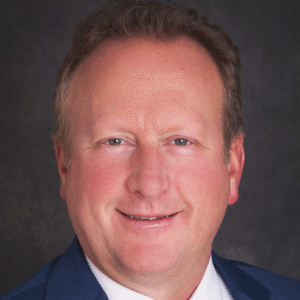

Jay Graves recently joined Stockman Bank as VP, Branch Manager for the Grand Avenue location in Billings. His responsibilities include overseeing bank operations, management and employee supervision, and all lending activities.

Graves brings 20 years of banking experience to the position, which includes commercial and agricultural lending and business development. His extensive knowledge will be an asset to Stockman Bank and the Billings community.

Graves earned his Bachelor of Science degree in Business Administration with an emphasis in finance and economics from Montana State University Billings. He is active in the community serving as a member of the Rotary Club, Exchange Club, and is a volunteer for the Big Sky State Games.

By Andrew Rice

The Center Square

A coalition of 18 attorneys general, led by Montana Attorney General Austin Knudsen, called on the nonprofit group As You Sow to end activities that may violate antitrust and consumer protection laws.

As You Sow, a nonprofit shareholder advocacy organization founded in 1992, seeks to “create large-scale systemic change by establishing sustainable and equitable corporate practices.”

In a letter to As You Sow CEO Andrew Behar, the attorneys general said the nonprofit pressures companies to pursue net-zero emissions policies that are incompatible with the production of fossil fuels.

“As You Sow demands artificial transformations of entire markets and sectors, inevitably impacting the output and quality of the goods and services produced by those sectors,” the attorneys general wrote in the letter.

The attorneys general argued As You Sow seeks to implement policies that are aligned with its predetermined agenda, leaving it potentially in violation of antitrust laws. The coalition said the nonprofit attempts to discourage shareholders from investing in fossil fuel companies due to alleged unsustainability.

“As Attorneys General, we have a duty to protect the citizens of our States from unlawful business practices, and we are prepared to enforce antitrust laws if necessary to stop any illegal conduct by As You Sow,” the group wrote.

The coalition, also said As You Sow may violate consumer protection laws by engaging in deceptive marketing regarding its relationship between the nonprofit’s various entities.

As You Know is a for-profit entity with a close business relationship to As You Sow. The attorneys general said As You Sow shared data about public companies with As You Know.

As You Know, the attorneys general allege, uses its benchmarking tools based on datasets from As You Sow’s database.

“As You Sow generates data for As You Know and supplies the activism and rules-based proxy voting underlying the market for As You Know’s products and services sold to investors,” the letter reads.

The attorneys general questioned whether the two entities’ relationship could be considered independent given the information provided publicly in advertisements.

“If companies do what As You Sow demands, they will score more favorably on As You Know’s benchmarks sold to them and to investors, which in turn influence investments and proxy voting,” the letter reads.

Will Hild, executive director of Consumers’ Research, criticized As You Sow for its policy agenda and misrepresentation of business relationships between entities.

“Instead of focusing on things like lower energy costs or strengthening the American economy, As You Sow’s only priority is to reshape the energy sector to meet senseless net-zero benchmarks,” Hild said.

Attorneys general Steve Marshall, Ala.; Stephen Cox, Alaska; Tim Griffin, Ark., James Uthmeier, Fla.; Christopher Carr, Ga.; Raul Labrador, Idaho; Brenna Bird, Iowa; Kris Kobach, Kansas; Liz Murrill, La.; Catherine Hanaway, Mo.; Mike Hilders, Neb.; Drew Wrigley, N.D.; Gentner Drummond, Okl.; Alan Wilson, S.C.; Marty Jackley, S.D.; Derek Brown, Utah; Keith Kautz, Wyo.; joined Montana Attorney General Austin Knudsen to sign the letter.

“As You Sow, a little-known but influential member of the climate cartel, is attempting to eliminate the fossil-fuel industry, which will have a devastating impact on Montanans, especially in the winter when we need fossil fuels to heat our homes,” Knudsen said.

“Their efforts to push their green, woke agenda and box out the fossil-fuel industry appear to be a violation of antitrust and Montana consumer protection laws. As attorney general, it’s my duty to ensure they are following the law and hold them accountable if they are not.”

By Diogo Costa, President

Foundation for Economic Education.

. . . New York mayor Zohran Mamdani used his inaugural address to promise he would replace the “frigidity of rugged individualism” with the “warmth of collectivism.” It is a clever bit of rhetoric. Mamdani himself seems like a nice and warm person. And the imagery works. To be “cold” is to be isolated, shivering and alone. To be “warm” is to be embraced, held, and safe. Collectivism here appears as this kind of coming in from the cold, a fire around which we gather, a blanket that covers us all. 

Anyone watching the AppleTV show Pluribus might recognize something in Mamdani’s promise. The series imagines an alien hive mind which has absorbed almost all of humanity. What makes it terrifying is that the hive is warm and nice. Those who join it seem content. Blissful, even. The collective embraces you. You are never alone.

But something in us recoils when we watch that. There’s a difference between voluntarily joining a community and being absorbed by one. We want to belong somewhere, but we also want to remain someone. At what point does “warmth” become a fever? We want the freedom to control our own thermal state. Sometimes we don’t want to be warm. Sometimes we want to step outside, feel the cold, and return when we choose..

What individualism actually names is not self-isolationism, but self-possession, and the capacity to be somewhere and still be yourself.

In The Abolition of Man, C.S. Lewis described a society that had traded objective moral reasoning for something softer, what we might call niceness, or agreeableness, or simply going along with the group. Such a society, Lewis warned, would produce “men without chests”: people with appetites below and intellects above, but no trained moral instinct to connect them. Just calculations about what the group wants and how to stay in its good graces.

The warm collective doesn’t ask you to be brave and it doesn’t reward those who stand for something. It requires you to be agreeable. And eventually, Lewis predicted, a society that educates this kind of person will be ruled by “Conditioners”: warm tyrants, benevolent managers. When everything becomes negotiable, including human dignity itself, someone will do the negotiating.

The young are especially susceptible to this. They’re caught between two powerful forces: a genuine desire to be their own person and a desperate hunger to belong. No matter the generation, young people often think of themselves as individualists. They reject their parents’ values, question authority, cultivate an aesthetic of independence. But scratch the surface and you find a tribal engine running at full speed. 

This is a kind of false individualism, not in the strict Hayekian sense, but in the young one. Think of the vibe of independence, the posture of not caring, the costume of rebellion. It directs its skepticism only at the people who have always offered support (family or traditional values) while remaining defenseless against peer conditioning. It says “I don’t need your approval” to parents while desperately seeking approval from strangers online.

False individualism has no immune system against the warm collective. It’s more concerned with managing reputation than building character. When the social weather shifts, it shifts with it.

True Individualism, in this sense, is the capacity to stand somewhere even when there is a massive social cost. It requires that “trained chest” Lewis wrote about: courage, honesty, and a commitment to standards that exist outside of vibes.

When we hear Mamdani’s socialist discourse, the initial temptation is to answer him with better arguments. And we should make better arguments. The case for economic freedom, voluntary cooperation, and limited government is stronger than the case for collectivism, which, as in Mamdani’s version, must always hide its costs and exaggerate its benefits.

But better arguments aren’t enough. If the only problem were ignorance, we’d win debates and then win people. But we can win the argument and lose the person. We can be right and still be dismissed.

Because the person we’re talking to isn’t just reasoning through the argument. They’re managing their social position. They’re calculating what it will cost them to agree with us. In 2026, many young people get that free markets work or that individual liberty is what made America the most successful nation in human history. But they also know that saying so might result in “social death.”

This means that defending freedom requires more than white papers and op-eds. It requires forming people who can carry freedom forward. People whose instinct isn’t to check what’s popular before deciding what’s true. People who have practiced the discipline of saying what they think even when it’s unpopular. And who know from experience, that you can survive social disapproval and come out the other side.

This is the cultivation of a trained chest. The development of what Leonard Read called high moral character: the habits that let you do the right thing when doing the right thing is hard.

FEE has never been embarrassed about this. Consider Leonard Read or Henry Hazlitt or any of the great figures in our tradition and you’ll find the moral language of character and the dignity of peaceful cooperation. That there is something dignified about a person who takes responsibility for their own life, and something degrading about a system that treats people as instruments of collective ends.

The collectivist version isn’t actually warm. It’s a simulation of warmth. It provides the feeling of belonging without the substance. As in Pluribus, you’re embraced, but you’re also trapped. The group accepts you only so long as you accept its terms, and those terms include not being too much yourself.

Real warmth comes from genuine relationships with people who know you as an individual. People who love you as you are, not as a member of a category or an identity. Real warmth requires boundaries, because without boundaries there are no individuals, and without individuals there’s nothing to connect.

Sales tax will be a primary subject of the Bureau of Business and Economic Research’s annual Economic Outlook Seminar this year. The seminars, which will be held in nine Montana cities will commence on January 27 in Helena. It will be held on other dates in Great Falls, Missoula, Billings, Bozeman, Butte and Kalispell, Lewistown, and Havre. It will be in Billings on Feb. 3.

The research and history of sales tax in Montana in the context of today’s economic conditions and trends will be explored during the seminar, as well as the economic forecasts for communities around the state, along with a look at Montana’s important industry sectors.

Montana is one of five states without a general sales tax. Voters resoundingly defeated sales tax proposals in 1993 and 1971, and the idea still polls poorly today.

It’s been over 30 years since Montana voters have weighed in on sales tax, and interest in putting it on the ballot again is rising. At least five bills were introduced in the 2025 legislative session having to do with sales tax. As tourism increases and property taxes become more unpopular, some Montanans believe it’s time to reconsider a sales tax.

How would a sales tax affect Montana’s economy? How much revenue could it generate, and could it meaningfully reduce property taxes? Could it be designed to target tourists and reduce the impact on local residents?

That’s exactly what BBER economists and keynote speaker, Bob Story, executive director of the Montana Taxpayers Association, will be discussing at the 2026 Economic Outlook Seminars.

Register for the event a the Bureau’s website. A webcast will be provided for regions outside the nine cities.

The National Federation of Independent Business (NFIB) recently announced to its membership that despite some “wins” in 2025, there is still lots that Congress can do to improve the economic and regulatory landscape for small businesses.

Going into 2026, NFIB said its focus will be on getting Congress to act to lower operating costs, secure affordable health care, and limit regulations on small businesses.

Small businesses  saw great progress last year, stated an open letter to NFIB members. The permanent extension of the 20% Small Business Tax Deduction will help more than 33 million small businesses across the country invest in their businesses and communities.

Important regulatory relief exempted U.S. small business owners from the invasive Beneficial Ownership Information  (BOI) reporting requirement  that posed security risks and significant penalties. Although, “This win for small business is not yet fully across the finish line,” stated the announcement. “Congress needs to permanently exempt  US small businesses or repeal the BOI mandate so a future administration does not rewrite this regulation. The data from US small businesses that have already filed their BOI also need to be destroyed.”

NFIB’s top legislative priorities for 2026 include:  

* BOI reporting 

* Credit card swipe fees 

* Lower taxes  

*Affordable health care 

    options 

* Labor mandates 

* Electricity and fuel costs 

* Right to Repair 

* Regulatory reform 

*Stopping  foreign   

      investor  lawsuits 

Health Care Affordabiliy

Health care affordability remains a major challenge for small businesses. The U.S. House of Representatives passed The Lower Health Care Premiums for All Americans Act, or H.R. 6703, which will give small businesses affordable health care options that have been a top problem for decades. 

The bill includes provisions that expand health care options for small business owners and facilitate transparency to Pharmacy Benefit Managers (PBMs). It also allows small businesses to leverage purchasing power and lower costs by joining Association Health Plans (AHPs). This encourages competition and freedom of choice, lowering costs and allowing the flexibility small businesses need to provide health care for their employees.  

NFIB members have consistently ranked the cost of health care as their number one problem in NFIB’s Problems and Priorities Survey every year since 1986. The U.S. House recently passed this bill, so now it goes to the Senate for a vote. 

NFIB’s December jobs report found that 33% (seasonally adjusted) of small business owners reported job openings they could not fill   in December,  unchanged from November. Unfilled job openings remain above the historical average of 24%. Twenty-eight percent have openings for skilled workers (up 2 points), and 10% have openings for unskilled labor (down 2 points). 

Employment Conditions

“The economic climate continues to support the small business labor market,” said Chief EconomistBill Dunkelberg.  “Although employment conditions vary, fewer owners report labor as their biggest challenge while compensation pressures are escalating.” 

A seasonally adjusted net 17% of owners plan to create new jobs in the next three months,  down  2 points  from November. 

Overall, 53% of owners reported hiring or trying to hire in December, down 3 points from November. Forty-eight percent of owners (91% of those hiring or trying to hire) reported few or no qualified applicants for the positions they were trying to fill (down 2 points). Twenty-five percent reported few qualified applicants (down 5 points), and 23% reported none (up 3 points). 

In December, 19% of small business owners cited labor quality as their single most important problem, down 2 points from November. Labor costs, reported as the single most important problem by small business owners, rose 1 point to 9%. 

Seasonally adjusted, a net 31% of small business owners reported raising compensation in December, up 5 points from November. A net 24% (seasonally adjusted) plan to raise compensation in the next three months, unchanged from November. 

In recent years, 22 percent of the employed have reported holding a government-issued license, in professions ranging from physical therapy to cosmetology to public school teaching. Because occupational licenses can be costly in time and money to obtain, licensure matters for how the labor market performs and who can access economic opportunity, stated a recent report from the Federal Reserve Bank of Minneapolis.

Montana is second, only to Maine, in having the most licensed occupations. Maine licenses 28.5 percent of their professions and Montana 28 percent, with 154,100 licensed workers in 2024. The national average is 21 percent.

Occupational licensure, both the share of workers who have a license and the number of licensed occupations appear to have stabilized in recent years, after several decades of growth.

By one estimate, the share of workers who were licensed in the 1950s was only about 5 percent. At the time, most people worked jobs that tended to be unlicensed: almost half of the employed were working in agriculture, mining, construction, or manufacturing. In the decades that followed, the share of licensed workers rose to 22 percent, and it’s stayed roughly at that level in recent years (2016-2025). The rise in the share of licensed workers was driven by two factors: occupations became newly licensed in many states, and employment shifted toward the service sector.

When deciding whether to license an occupation, states appear to be looking to each other: the decisions of adjacent states and a few bellwethers like California, New York, and Texas all have predictive power for when a given state licenses an occupation. Professional associations also matter. Once an association is organized in a state, licensure or other forms of regulation become dramatically more likely.

When the tasks in an occupation become more complex, the existence of professional associations themselves may become more likely. Another factor is whether an occupation is exposed to competition from immigrants. Prior work by Minneapolis Fed researchers found that licensing disproportionately reduces employment of foreign-born workers.

Regardless of the reason for the enactment of occupational licensure, one pattern in the data stands out: delicensure is rare. An occupation that started out licensed in any given year from 1950 to 2020 remained licensed 99.9 percent of the time in the next year.

Throughout the second half of the twentieth century and into the 2000s, the share of occupations that transitioned into licensure kept rising, to a high of 3.6 percent in 2001–2010.

Many occupations are currently licensed in some but not all states. The Federal Reserve publication concluded, low- and moderate-income workers bear a particular burden to the extent that the costs of licensing fees and delayed employment are large relative to their incomes. In turn, this burden deters interstate migration by licensed workers and can impair the efficient functioning of U.S. labor markets.

To address some of these issues, roughly 20 states have enacted universal licensure recognition (ULR) reforms with the intent of making it easier for licensed professionals to move among states and continue to work. Using data from the Montana Department of Labor & Industry, researchers volume of licensing in Montana pre- and post-ULR adoption and describe the challenges licensing boards face as they adjust their practices to comply with the new policy.”

In recent decades, some licensing authorities have attempted to reduce interstate licensure barriers by constructing profession-specific compacts. Among other anticipated benefits, these compacts aim to make it easier for licensed individuals to work across state lines—temporarily or after a permanent move. However, a compact can take many years to coordinate across participating states, has limited scope and may result in states agreeing to higher levels of requirements than some policymakers would prefer.

ULR is designed to avoid those downsides by allowing states to set their own standards for how to acknowledge licenses from other states. In March 2019, the State of Montana enacted a ULR reform by changing one word at the beginning of the relevant state law, from “A board may issue a license to practice …” to “A board shall [emphasis added] issue a license to practice … .” The reformed law requires boards to license out-of-state applicants if their original state license requires “substantially equivalent” education and experience. Some states have implemented even stronger reforms that omit that language.

Some proponents of Montana’s reform testified in legislative committees that the bill was a critical fix for workforce issues. They gave examples of workers licensed in other states who had to pay thousands of dollars for additional educational credits or who passed up opportunities because of differences in licensing requirements across states. Other supporters emphasized that the bill “simply reflects what is currently happening” or would reduce licensing-processing times.

Overall, Montana experienced an increase in licensing from 2012, when a total of 7,429 licenses were issued, through 2022, when a total of 15,575 licenses were issued, with particularly strong growth from 2020 through 2021. Licensure by endorsement grew especially quickly, from 2,428 licenses issued in 2012 to 7,527 in 2022.

Jodie Cross has purchased the Montana Trolley Company, in Kalispell, from Scott Davie. The business will be mostly run by Cross’ daughters Tamina and Kaylee. The business has been operating in the Flathead Valley for 13 years.

The U.S. Department of Commerce has announced that Montana State University will be home to a newly established Community Engagement Office for the U.S. Patent and Trademark Office. The office will support workforce development in the state and region, especially in the advanced manufacturing and computing sectors. The office will provide inventors and entrepreneurs a direct connection to federal intellectual property resources and guidance tailored to Montana’s technology ecosystem. 

A panel of Montana state medical board members has voted unanimously to revoke the medical license of Dr. Thomas Weiner. Weiner was a the former Helena cancer doctor who has been accused of prescribing unnecessary treatments and harming patients.  The ruling prohibited him from practicing medicine in Montana ever again.

Intermountain Health Holy Rosary Hospital in Miles City has been recognized as high performing among the Best Hospitals for Maternity Care in America, The rankings were compiled by U.S. News & World Report in its annual rankings.

A logging and fuels reduction project near the mouth of Rock Creek has been approved by the Lolo National Forest. The  project has the stated goal of reducing wildfire risk in a high-priority area along the Clark Fork River.

Glacier Park hosted 2.95 million visitors between January and September of this year. Officials said they expect the final total to be around the park’s record high. The current record, which was set in 2017, is 3.3 million annual visitors. Driving the surge in visitation is a shift toward more shoulder-season recreationalists. May visitation has increased 26% since 2021, and visitation during September and October has also been on the rise. Next summer, visitors will likely be able to enter the park at any time without securing a vehicle reservation beforehand. The shift is part of a program that officials said are intended to address two of the park’s most persistent issues: overcrowding at Logan Pass and an ineffective shuttle system. They also plan to enforce a three-hour parking limit on all personal vehicles at Logan Pass.

All of the financial and physical assets of the Dawson County Economic Development Council were divided among seven local organizations after its board  voted unanimously to dissolve. Until this last week members of the DCEDC had not convened for an official meeting since October 2024 when they agreed some revolutionary changes were needed in order to sustain the local economic development organization.

In a 3-2 decision, the Helena City Commission appointed Alana Lake as the next Helena city manager. Lake was most recently the executive director of the Montana Public Service Commission. According to the City, she has more than 10 years of experience in military and federal law enforcement.

Elote Mexican Bar and Grille in Missoula closed permanently on Jan. 4. The restaurant opened two years ago. The restaurant offered authentic Mexican cuisine. The restaurant opened under the same ownership group as Liquid Planet and Pangea.

Citizens for a Better Flathead are petitioning for stronger lake and lakeshore protections on Whitefish Lake. These actions are also rekindling a decades-old debate on the jurisdiction of Whitefish Lake. The group has filed an appeal with Flathead County calling for accountability.

Yellowstone Wildlife Sanctuary (YWS) has received a grant from the National Fish and Wildlife Foundation. The grant is part of the Montana Community-Bear Conflict Prevention Efforts Fund. The panel evaluated ten proposals and approved funding for YWS’ proposal for Red Lodge and Carbon County. The grant is a reimbursable grant approved for $30,965 to support community bear awareness education and outreach.

A coalition of Montana counties has petitioned the Department of Interior (DOI) to vacate a 2022 decision that allows American Prairie Reserve (APR) bison to graze on BLM allotments. In response, DOI Secretary Doug Burgum on December 9 took the extraordinary step of assuming jurisdiction over a review of the 2022 decision. The Montana Natural Resource Coalition of Counties (MTNRC) points out that BLM lands are reserved for livestock grazing and cannot be rewilded. BLM regulations give grazing preference to cattle, sheep, horses, burros, and goats. APR’s plan to remove 3.5 million acres of Montana land from agricultural production is viewed as an existential threat to the ranching communities in their target area. Without preferential treatment from BLM, APR’s plan to rewild and depopulate this area will become more difficult.

Former Williston fire chief Matt Clark has entered the Williston City Commission race. Clark, who resigned from his position with the fire department in November 2025, said the decision to run was not finalized at the time of his resignation. but became clearer as he reflected on his career in public service. 

Grizzly bears in the Greater Yellowstone Ecosystem have faced a record number of deaths in 2025, with 73 recorded deaths to date. According to new data from the U.S. Geological Survey, 2025 recorded the highest number of grizzly bear deaths since 2015. Only six bears’ deaths were due to natural causes. Twenty-one of the 73 deaths were due to perceived conflicts with livestock growers. Eighteen bears were killed after being attracted to human-dominated areas in search of unsecured attractants like garbage.

Butte-Silver Bow’s chief executive officer has established an ad hoc committee to answer questions about the proposed Sabey Data Center in Butte. The chief executive has been a strong supporter of a proposed $1 billion data center. The committee looking at the project isn’t aimed at taking sides.

The Glasgow City Council Personnel Committee has met to begin the process on replacing the Glasgow Public Works Director Paul Skubinna, who resigned, and the Glasgow Police Chief Robert Weber who has announced he will be retiring this year.

Ryan Busse, a 2024 Democratic candidate for governor, has announced he will compete for Montana’s western U.S. House district in this year’s election. Other Democrats seeking the Democratic nomination are Sam Forstag, of Missoula, Russell Cleveland, of St. Regis, and Simms native Matt Rains.

An animal tested positive for brucellosis in Gallatin County, the state Department of Livestock reported in December. The state received confirmation that the animal was positive and the herd has been quarantined, The Department of Livestock does not identify the species of animal as a rule for confidentiality.

Following the allocation of low-income housing tax credits in October, CR Builders LLC of Billings received notification of funding awards totaling over $2 million from two federal programs. The HOME Investment Partnership Program and Housing Trust Fund, both administered by the Montana Department of Commerce, provided the additional resources for the Saddlehorn Apartments, a 30-unit affordable housing project planned for Miles City’s Last Chance Subdivision.

Montanans wouldn’t know it but most of the state’s river basins have begun the year with normal to above-average snowpack in the mountains, according to the season’s first federal water supply report. The report states that Montana shows normal or above-normal snowpack in most of the state’s river basins.

Reecia’s Salon and Spa Whitefish has been in business for 25 years. Salon owner Reecia Maxwell has been a stylist for 33 years.

Chronic wasting disease was recently detected in a mule deer buck taken by a hunter east of Stanford in Hunting District 419. Multiple rounds of testing confirmed that the deer was positive for CWD. This is the first time CWD has been detected in Hunting District 419.

By Roger Koopman

Newsflash!  Now that Rubio and Trump have decided to “run” Venezuela for awhile, that country’s deposed dictator will doubtless have a lot of time on his hands during his sleepovers in a New York City prison.  The word on the street is that NYC’s just-elected socialist mayor is negotiating bail for Maduro, and planning to put him on the city’s payroll as his personal consultant.  

And why not?  For a bright young socialist like Mamdani, the 26-year track records of Maduro and fellow Marxist/socialist Hugo Chavez have much to be admired.  Using the increasingly concentrated power of the state, they literally transformed their country, through confiscation, corruption, oppression and control.  Ideologically speaking, this is not far removed from Mamdani’s transformational vision for New York when he declares, “we are replacing the frigidity of rugged individualism with the warmth of collectivism.”  Warmth indeed.  Such “warmth” has massacred and enslaved the human race for thousands of years.

But the point is, Maduro’s hands-on experience with enforcing the socialist/collectivist paradigm could come in handy for the charismatic Mamdani, apprenticing under the “master” as it were, while seeking his own version of the People’s Paradise. Consider Chavez’s and Maduro’s achievements, reflecting the final stage of every collectivist political system:

*    Government land confiscation and nationalization of thousands of private businesses and industries, replacing the owners and managers with political cronies who ran these companies into the ground.   Despite massive government subsidies, once-healthy businesses closed everywhere, leading to record unemployment.

*    Previously the richest country in Latin America, Venezuela’s living standards plummeted 74% in the last 10 years alone (2013-2023.)  By 2020 the economy had shrunk 61% in per capita terms, and the nation’s GDP had dropped over 80%.

*   Squandering huge revenues from the oil boom, the government continued to raise taxes and create double-digit deficit spending.  It then printed truckloads of worthless currency, creating hyperinflation so bad that consumer prices were rising 50% a month.  Today, almost 90% of the population is living in poverty.  This, even after receiving $1.9 billion in US foreign air – probably most of which was skimmed off by the socialist elites and never reached those it was intended to help.

*   In the words of one economist, “The regimes of Chavez and Maduro decimated the country through relentless class warfare and government intervention in the economy.”  In a country of 30 million, close to 8 million have now voted with their feet and become refugees in foreign lands, leaving their homes, communities, friends and families behind.  That includes over 20,000 doctors who simply could no longer function under the heel of their socialist regulators.

Such is the legacy of collectivism and socialism wherever it is found.  It requires the increasing concentration of governmental power, and the steady usurpation of personal freedoms.  Power inevitably corrupts – discouraging achievement and incentivizing theft.  At the end of the day, socialism is nothing less than organized crime, that impoverishes the people and enriches the political elite.  Winston Churchill put it perfectly:

“Socialism is the philosophy of failure, the creed of ignorance and the gospel of envy.”

In my view, the biggest concern about the election of avowed socialists like Zohran Mamdani is not that The Big Apple will turn into a Venezuelan-style socialist hell-hole tomorrow.   What concerns me are the people who are believing The Socialist Lie of getting something for nothing, courtesy of a government that produces nothing.  The only costs are your freedom and self-respect, a trade-off they seem willing to make.  Afterall.  A little starvation and oppression never hurt anybody, right?  Just ask a Venezuelan.

It’s quite evident that these angry, envious, entitlement-oriented Americans have never been taught the difference between the blessings of a dynamic free society and the dreary, stifling existence of spread-the-misery socialism.  The fundamental opposites of collectivism and freedom.

Will our schools once again teach that?  Will our pulpits once again preach it?  Or are we destined to live out Thomas Jefferson’s warning, “A nation that expects to be ignorant and free… expects what never was and never will be.” 

Roger Koopman is president of Montana Conservative Alliance. He served four years in the Montana House of Representatives and eight years as a Montana Public Service commissioner. He operated a Bozeman small business for 37 years.

By Evelyn Pyburn

A government that recognized the individual, didn’t exist until the emergence of the United States. Even during the Enlightenment, just the concept of it was just as readily recognized as a threat to autocracy as it is today, and it was just as fervently opposed by aspiring dictators. Individualism became a reality for the very first time, and essentially the only time, with the American Revolution.

Individualism was the “shot heard round the world.” And it is still reverberating.

Now that New York City, a city previously distinguished as the embodiment of economic freedom and recognized as such throughout the world, has elected a communist mayor, and now that liberals are heralding Venezuelan’s communist leader, Nicolás Maduro, as a hero, we shouldn’t be surprised that socialists will now turn with vehement attacks on private property. Private property must be the next target. Efforts to destroy western civilization and impose communalism cannot happen in the same sphere as private property rights.

Private property rights are about the individual person, not the collective. If society is to erase recognition of the sovereignty of One, over the nebulous impulses of the masses, the individual as a concept CANNOT be allowed to exist – which is what private property is all about. PRIVATE PROPERTY IS STANDING ROOM FOR THE INDIVIDUAL.

That is why private property never existed before the writing of the US Constitution. Never before was there a reason to differentiate one property from another. All property – everything – including the person — without question, belonged to the king, the despot, the overlord, the political elite.

The singular individual did not exist as a concept nor as a reality. Each One was the property of the feudal lord — readily dispensable upon the wavering whims to serve the horde. Without the ability to own themselves and the means of survival, the individual person is but fodder for the mob.

Any collectivist crusade must extinguish private property. It will now be attacked with vehemence, because you and I, as individuals, must be quashed, silenced, suppressed, and that cannot happen if we are allowed to own property – the means of our survival.

But this attack is not new. It has been going on for a very long time. At the very least, since public schools quit teaching the tenets of the US Constitution — since students ceased to learn about the differences in “isms” and most especially about the importance of private property rights.

In fact, the violation of property rights in the US has its own government infrastructure, which has offices in almost every town in the country. They oversee centralized planning, building codes, zoning, and community development. Besides being shielded from most State oversight, these agencies get the lion’s share of their funding from the federal government.

And, wow, have they ever been effective. It is almost exclusively because of this weighty governance that our country has a housing shortage. Just think about it. Has there ever been a demand for a product that cannot be delivered by the market? It is almost unheard of.

High prices indicate high demand. What other product, in high demand, doesn’t have the whole of the market place rushing to deliver it to consumers, as fast as possible? Even if the product is illegal, producers rush to meet market demand, ie. drugs! Black markets!

Housing has essentially become illegal through the unaffordability and encumbrances of building codes and other superfluous regulations. So absolute is its government prohibitions, the market cannot overcome them.

I have covered the issue of centralized planning, zoning and building restrictions since the 1970s and in all that time I have never heard any discussion from anyone regarding property rights or cost. Never, never in adding a new restriction or requirement has anyone ever said, “How much will that cost the homeowner?”

Oh, yes, the cost of whether the agency can afford to enforce some new rule has been raised, but never, never, never a word about whether the property owner – the individual citizen—  can afford to pay for the new mandate. And NEVER has there been discussion about its impact on businesses, or the economy and certainly not on housing affordability.

So as the socialists wring their hands and cry crocodile tears about how homes are no longer affordable, don’t believe they are sincerely concerned. The laments are not directed at changing the dictatorial system; they are but advancing the welfare state. They are pleading for government housing. Paving the way for a greater collectivist state and more bureaucracy.

Over the decades, this has all unfolded so effectively because public school children were not, and are not, taught about property rights, or about the Constitution and the pillars that uphold its principles. While the children may pledge to support freedom, they were never told there is no freedom without property rights.

And, unless citizens stand their ground against the attack upon property rights that is manifesting before us, we will lose it all – property rights include more than a house. Property rights are our means of conducting business, advancing technology and new ideas, of earning a living and being able to keep it, of having the means to learn or to invest or to support those we care about – of being able to have a savings or to keep our retirement funds, or of having a means to travel and the latitude to do so, and of pursuing good health. Property rights are our means to “life, liberty, and the pursuit of happiness.”