In recent years, 22 percent of the employed have reported holding a government-issued license, in professions ranging from physical therapy to cosmetology to public school teaching. Because occupational licenses can be costly in time and money to obtain, licensure matters for how the labor market performs and who can access economic opportunity, stated a recent report from the Federal Reserve Bank of Minneapolis.
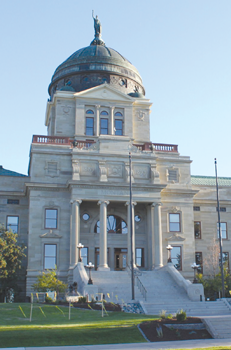
Montana is second, only to Maine, in having the most licensed occupations. Maine licenses 28.5 percent of their professions and Montana 28 percent, with 154,100 licensed workers in 2024. The national average is 21 percent.
Occupational licensure, both the share of workers who have a license and the number of licensed occupations appear to have stabilized in recent years, after several decades of growth.
By one estimate, the share of workers who were licensed in the 1950s was only about 5 percent. At the time, most people worked jobs that tended to be unlicensed: almost half of the employed were working in agriculture, mining, construction, or manufacturing. In the decades that followed, the share of licensed workers rose to 22 percent, and it’s stayed roughly at that level in recent years (2016-2025). The rise in the share of licensed workers was driven by two factors: occupations became newly licensed in many states, and employment shifted toward the service sector.
When deciding whether to license an occupation, states appear to be looking to each other: the decisions of adjacent states and a few bellwethers like California, New York, and Texas all have predictive power for when a given state licenses an occupation. Professional associations also matter. Once an association is organized in a state, licensure or other forms of regulation become dramatically more likely.
When the tasks in an occupation become more complex, the existence of professional associations themselves may become more likely. Another factor is whether an occupation is exposed to competition from immigrants. Prior work by Minneapolis Fed researchers found that licensing disproportionately reduces employment of foreign-born workers.
Regardless of the reason for the enactment of occupational licensure, one pattern in the data stands out: delicensure is rare. An occupation that started out licensed in any given year from 1950 to 2020 remained licensed 99.9 percent of the time in the next year.
Throughout the second half of the twentieth century and into the 2000s, the share of occupations that transitioned into licensure kept rising, to a high of 3.6 percent in 2001–2010.
Many occupations are currently licensed in some but not all states. The Federal Reserve publication concluded, low- and moderate-income workers bear a particular burden to the extent that the costs of licensing fees and delayed employment are large relative to their incomes. In turn, this burden deters interstate migration by licensed workers and can impair the efficient functioning of U.S. labor markets.
To address some of these issues, roughly 20 states have enacted universal licensure recognition (ULR) reforms with the intent of making it easier for licensed professionals to move among states and continue to work. Using data from the Montana Department of Labor & Industry, researchers volume of licensing in Montana pre- and post-ULR adoption and describe the challenges licensing boards face as they adjust their practices to comply with the new policy.”
In recent decades, some licensing authorities have attempted to reduce interstate licensure barriers by constructing profession-specific compacts. Among other anticipated benefits, these compacts aim to make it easier for licensed individuals to work across state lines—temporarily or after a permanent move. However, a compact can take many years to coordinate across participating states, has limited scope and may result in states agreeing to higher levels of requirements than some policymakers would prefer.
ULR is designed to avoid those downsides by allowing states to set their own standards for how to acknowledge licenses from other states. In March 2019, the State of Montana enacted a ULR reform by changing one word at the beginning of the relevant state law, from “A board may issue a license to practice …” to “A board shall [emphasis added] issue a license to practice … .” The reformed law requires boards to license out-of-state applicants if their original state license requires “substantially equivalent” education and experience. Some states have implemented even stronger reforms that omit that language.
Some proponents of Montana’s reform testified in legislative committees that the bill was a critical fix for workforce issues. They gave examples of workers licensed in other states who had to pay thousands of dollars for additional educational credits or who passed up opportunities because of differences in licensing requirements across states. Other supporters emphasized that the bill “simply reflects what is currently happening” or would reduce licensing-processing times.
Overall, Montana experienced an increase in licensing from 2012, when a total of 7,429 licenses were issued, through 2022, when a total of 15,575 licenses were issued, with particularly strong growth from 2020 through 2021. Licensure by endorsement grew especially quickly, from 2,428 licenses issued in 2012 to 7,527 in 2022.